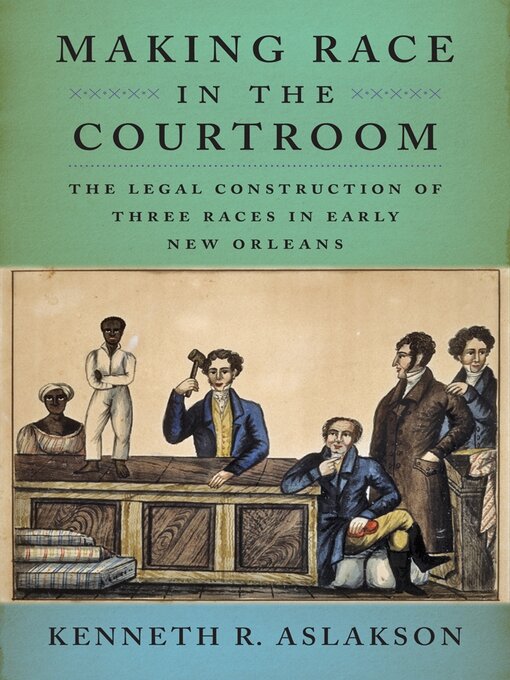
No American city's history better illustrates both the
possibilities for alternative racial models and the role of the law in shaping
racial identity than New Orleans, Louisiana, which prior to the Civil War was
home to America's most privileged community of people of African descent. In
the eyes of the law, New Orleans's free people of color did not belong to the
same race as enslaved Africans and African-Americans. While slaves were
"negroes," free people of color were gens
de couleur libre, creoles of color, or simply creoles. New Orleans's
creoles of color remained legally and culturally distinct from "negroes"
throughout most of the nineteenth century until state mandated segregation
lumped together descendants of slaves with descendants of free people of color.
Much of the recent scholarship on New
Orleans examines what race relations in the
antebellum period looked as well as why antebellum Louisiana's gens de couleur enjoyed rights and
privileges denied to free blacks throughout most of the United States. This book, however, is less concerned with the what and why questions than with how people
of color, acting within institutions of power, shaped those institutions in ways beyond
their control. As its title suggests, Making Race in the Courtroom argues that race is best understood not
as a category, but as a process. It seeks to demonstrate the role of
free people of African-descent, interacting within the courts, in this process.
- Most popular
- Project Gutenberg eBooks
- Page to Screen
- Check it out--great reads without the wait!
- See all ebooks collections
- Most popular
- Audiobooks for the Whole Family
- Noteworthy Narrators
- Full Cast Audiobooks
- See all audiobooks collections
- Let's Get Cooking!
- News and Politics
- Celebrity Magazines
- Magazines are Here...Check 'em out!
- Kids & Teens Magazines
- See all magazines collections
